
Quick answer: To start a mitumba business: pick one category (e.g. ladies' tops, jeans, children's clothes or shoes), learn the grades and how bales are opened, start with a small bale or a selected lot, sort and clean the pieces, price by grade, and sell both at a stall and online (WhatsApp, TikTok, an online shop). Profit comes from good buying and quick selling: slow stock eats the margin.
Choose a Niche
| Category | Why it sells | Watch out for |
|---|---|---|
| Ladies' tops and dresses | Fast fashion, many buyers | Many sellers; style matters |
| Jeans and trousers | Durable, steady demand | Sizes vary |
| Children's clothes | Children outgrow clothes fast | Check stains carefully |
| Shoes and sneakers | High value per piece | Pairs and sizes |
| Bedding and curtains | Homes always need them | Bulky to transport |
For baby and kids wear bought new at wholesale prices, compare baby clothes wholesale on Buy More Mall.
Bales, Grades and Opening
- Grade 1 (first grade): best condition, fewer pieces, higher price.
- Grade 2: mixed quality, more pieces, lower cost each.
- Sorted bales cost more but waste less.
- Many wholesalers let buyers watch a bale being opened or buy "camera" (selected) pieces; ask before you pay.
- Buy from the same honest wholesaler so you learn their quality.
Capital and Costs
| Item | Notes |
|---|---|
| Stock (bale or lot) | The largest cost; start small |
| Transport | From wholesaler to your stall |
| Washing and ironing | Clean clothes sell faster and higher |
| Stall or hangers, mirror | Display matters |
| Permit | County single business permit (how to get one) |
| Data and packaging | For online orders |
How to Price Mitumba
- Divide the bale cost (plus transport) by the number of sellable pieces to get cost per piece.
- Sort into top, middle and clearance piles.
- Price top pieces high, middle at a steady margin, clearance low to clear fast.
- Make back your cost on the top pile; the rest is profit.
Sell Online Too
- Post clear photos of each piece with size and price on WhatsApp status daily.
- Do try-on videos on TikTok (TikTok guide).
- Open a free Buy More Mall shop so customers can browse and order.
- Offer delivery by boda or pick-up points.
Example: Jeans Only
A seller buys only jeans lots, washes and folds them by size, and posts a "size of the day" every morning. Customers know her as "the jeans person"; most of her sales come from repeat buyers and referrals.
Your First 30 Days
- Week 1: visit wholesalers, learn grades, pick a niche.
- Week 2: buy a small lot, sort, clean and price.
- Week 3: sell at a spot and online every day.
- Week 4: review what sold; buy more of it.
Common Mistakes to Avoid
- Buying big bales before you know grades.
- Unwashed, creased clothes.
- No sizes in online posts.
- Holding slow pieces too long.
Stay safe: never pay a "registration", "activation" or "withdrawal" fee to get paid, and never share your password or M-Pesa PIN. Real online income comes from people paying for your content, products or skills.
Create your free Stay Home Network account, or log in with H-MAIL on app.stayhomenetwork.com.
Frequently Asked Questions
Is mitumba business profitable in Kenya?
Yes, with good buying, a clear niche and quick selling.
How much capital do I need for mitumba?
You can start with a small selected lot; a full bale needs more. Start small while you learn grades.
Which mitumba sells fastest?
Ladies' tops, jeans, children's clothes and shoes in common sizes.
How do I sell mitumba online?
Post clear photos with sizes and prices on WhatsApp, TikTok and an online shop.
What is a first-grade bale?
A bale of better-condition clothes with fewer defects, sold at a higher price.
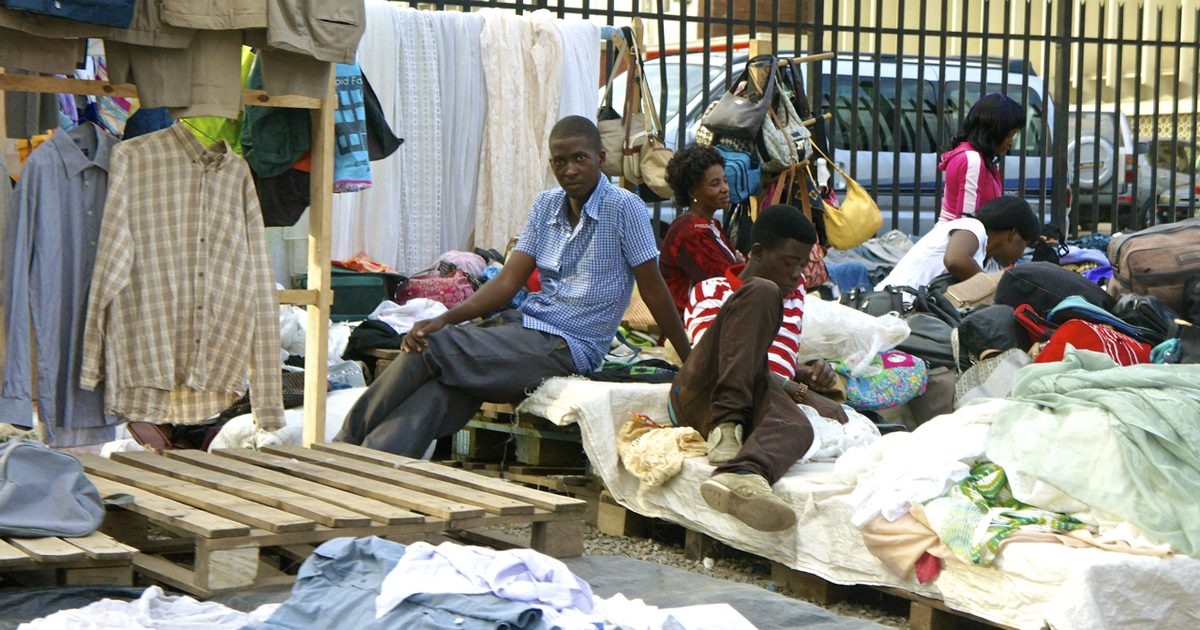
Cover photo: Second-hand clothes on sale at an open-air market. Photo: Street Market Ndolo.jpg by ISeeAfrica, CC BY-SA 4.0, via Wikimedia Commons.


