
Quick answer: To start tailoring from home you need sewing skills (a course or apprenticeship helps), a reliable sewing machine (a straight-stitch machine to start, an overlock machine as you grow), scissors, tape measures, an iron and a cutting table. Start with alterations and repairs for steady daily income, then add made-to-measure clothes, school uniforms or African print outfits. Take measurements carefully, agree prices and deposits upfront, and deliver on time.
Tailoring is a skill business: your customers come back because the clothes fit and are ready when you promised. Working from home keeps costs low while you build a name.
Skills and Training
You can learn through a tailoring and dressmaking course, a vocational training centre, or an apprenticeship with an experienced tailor. You need to measure, draft or adjust patterns, cut, sew, finish and fit. Practise on your own and family clothes before charging customers.
Equipment List
| Item | Use |
|---|---|
| Straight-stitch sewing machine (manual or electric) | Most sewing; the first machine you need |
| Overlock machine | Neat finishing of seams; makes work look professional |
| Tailor's scissors, thread snips, seam ripper | Cutting and corrections |
| Tape measures, rulers, tailor's chalk | Measuring and marking |
| Iron and ironing board | Pressing seams and finished garments |
| Cutting table | Laying out fabric |
| Mirror and a private fitting space | Fittings with customers |
| Threads, zips, buttons, interfacing, needles | Consumables |
How Much Does It Cost to Start?
A home tailoring business can start with one good straight-stitch machine, basic tools and a small stock of threads and zips. An overlock machine, an industrial machine and a shop space come later as orders grow. Buy machines with a warranty and spare parts available locally.
Services and Pricing
| Service | Notes |
|---|---|
| Alterations and repairs (hems, zips, taking in) | Quick jobs; steady daily income |
| Made-to-measure dresses, shirts, suits | Higher price; needs fitting |
| African print (kitenge) outfits | Popular for events and weddings |
| School uniforms | Big seasonal demand in January, May and September |
| Curtains, cushion covers, table cloths | Home décor orders |
| Group orders: weddings, churches, chamas, staff uniforms | Large orders; ask for deposits |
Price by the time and skill each item needs, plus materials if you supply them. Always take a deposit for made-to-measure work.
Taking Measurements and Avoiding Disputes
- Write every measurement in a book or phone note with the customer's name and date.
- Agree style, fabric, price, deposit and collection date before cutting.
- Book a fitting before the final finish.
- Photograph the agreed style picture and the fabric.
Getting Customers
- Show finished work on WhatsApp status, Instagram and TikTok (before/after alterations do well).
- Approach schools for uniforms and churches and chamas for group orders.
- Partner with fabric sellers who can send customers to you.
- Sell ready-made items online: free Buy More Mall shop.
Is Tailoring Profitable in Kenya?
It can be, especially when you keep machines busy with a mix of quick alterations and higher-value made-to-measure orders, and when you deliver on time so customers return and refer others. Seasonal school-uniform and wedding orders can lift income sharply.
Licences
Register the business name if you want to trade under a brand, and get a county single business permit (single business permit guide).
Fees, licences and rules change and differ by county. Confirm current requirements with your county office or the official body before you pay or apply.
Your First 30 Days
- Week 1: set up a clean work corner; service your machine.
- Week 2: offer alterations to neighbours and workmates; photograph your work.
- Week 3: make two sample outfits to display.
- Week 4: approach a school, church or chama for a group order.
Common Mistakes to Avoid
- Missing promised collection dates.
- No deposit on made-to-measure work.
- Poor finishing (no overlock).
- Unrecorded measurements.
- Underpricing your time.
Related: mitumba business and business ideas in Kenya.
Stay safe: never pay a "registration", "activation" or "withdrawal" fee to get paid, and never share your password or M-Pesa PIN. Real online income comes from people paying for your content, products or skills.
Create your free Stay Home Network account, or log in with H-MAIL on app.stayhomenetwork.com.
Frequently Asked Questions
How do I start a tailoring business in Kenya?
Learn the skills, buy a reliable sewing machine and tools, start with alterations, then add made-to-measure clothes and group orders, and get a county permit.
How much does it cost to start a tailoring business?
You can start from home with one straight-stitch machine, basic tools and consumables, and add an overlock machine and shop later.
Is tailoring business profitable in Kenya?
Yes, when your machines are busy with a mix of alterations and made-to-measure work and you deliver on time.
Which sewing machine is best for starting?
A reliable straight-stitch machine; add an overlock machine for professional finishing.
How do I grow my tailoring business?
Show your work online, take group orders from schools, churches and chamas, add ready-made items and hire help for busy seasons.
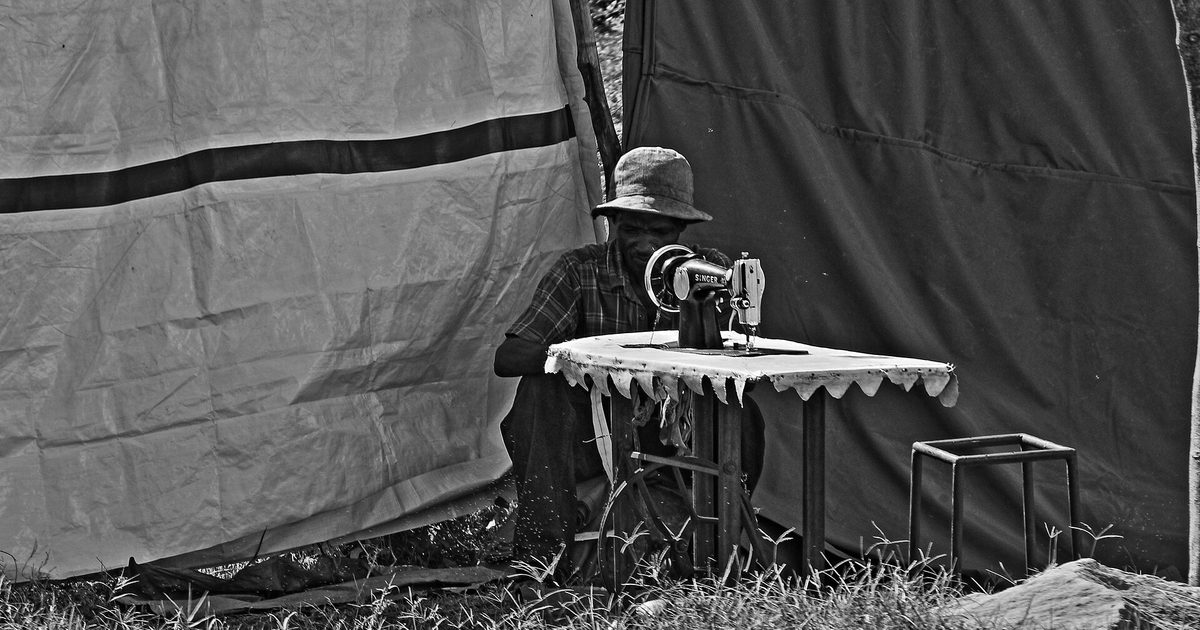
Cover photo: A tailor at a sewing machine by a tarpaulin workshop. Tarpaulin tailoring.jpg by Harold Odhiambo Otieno, CC BY-SA 4.0, via Wikimedia Commons.