
Quick answer: Choose a location with daily foot traffic (estate entrance, stage, near schools or homes), stock everyday fast movers first (sugar, flour, cooking oil, bread, milk, soap, airtime), get your county permit, set up an M-Pesa till, and record every sale and purchase. Price for a margin on each item, restock fast movers before they run out, and keep credit to a minimum. Grow by adding what customers ask for and selling online.
The neighbourhood duka is one of the most reliable small businesses in Kenya because people buy basics every day. Success comes from the right location, the right stock and disciplined cash.
Choose the Right Location
- Where many people pass daily: estate gates, stages, schools, plots with many tenants.
- Count passers-by at morning and evening peaks.
- Note competing shops and what they lack.
- Secure a written rent agreement.
Starting Stock List
| Category | Examples |
|---|---|
| Foodstuffs | Sugar, maize flour, wheat flour, rice, cooking oil, salt, tea leaves |
| Daily fresh | Bread, milk, eggs (egg business guide) |
| Household | Bar and washing soap, detergents, matchboxes, candles, tissue |
| Personal care | Toothpaste, lotion, sanitary pads |
| Snacks and drinks | Biscuits, sweets, soft drinks, water |
| Services | Airtime, data bundles, M-Pesa agency (M-Pesa agent guide) |
Buy fast movers in quantities you can sell within a week or two; test slow items in small amounts.
Capital and Costs
Plan for rent and deposit, shelves and a counter, first stock, permit, a till, and a cash buffer for restocking. Many shops start with a small stock and grow it from profits rather than borrowing.
Licences
A county single business permit (single business permit guide), and if you sell certain foods or alcohol, additional licences. Register your business name if you want a brand (how to register a business).
Fees, licences and rules change and differ by county. Confirm current requirements with your county office or the official body before you pay or apply.
Pricing for Profit
Know the buying price of each item, add a margin, and round to easy prices. Fast basics have small margins; snacks, toiletries and household items carry more. See how to price products for profit.
Records, Stock and Cash
- Write every purchase and daily sales, or use a simple app.
- Count fast movers daily and reorder before they run out (how to manage stock in a small shop).
- Keep business and household money separate; pay yourself a fixed amount.
- Use an M-Pesa till so payments are recorded (how to get an M-Pesa till).
Managing Credit (Deni)
Credit loses many shops. If you give it, limit it to trusted regular customers, write each amount and due date, and stop further credit until it is paid.
Grow Your Shop
- Add products customers ask for repeatedly.
- Offer home delivery to nearby plots via WhatsApp.
- Add services: M-Pesa agency, phone charging, gas refills where permitted.
- Open an online shop so customers can order: free Buy More Mall shop.
Your First 30 Days
- Week 1: choose location and sign the lease; get the permit.
- Week 2: fit shelves; buy starting stock; set up a till.
- Week 3: open; record every sale; note what customers ask for.
- Week 4: restock fast movers; drop slow items; start WhatsApp orders.
Common Mistakes to Avoid
- Poor location with little foot traffic.
- Too much slow stock.
- No records.
- Uncontrolled credit.
- Mixing shop money with household money.
Related: mama mboga business and business ideas with 10K.
Stay safe: never pay a "registration", "activation" or "withdrawal" fee to get paid, and never share your password or M-Pesa PIN. Real online income comes from people paying for your content, products or skills.
Create your free Stay Home Network account, or log in with H-MAIL on app.stayhomenetwork.com.
Frequently Asked Questions
How do I start a small shop in Kenya?
Choose a busy location, stock everyday fast movers, get a county permit, set up an M-Pesa till, record every sale and purchase, and control credit.
What stock should a small shop start with?
Foodstuffs (sugar, flour, oil, rice), daily fresh items (bread, milk, eggs), household and personal care items, snacks and drinks, and airtime.
How much capital do I need to start a shop?
Enough for rent, shelves, first stock, a permit, a till and a cash buffer for restocking. Many shops start small and grow from profits.
Is a small shop profitable in Kenya?
Yes, with a good location, fast-moving stock, records and little credit.
Do I need a licence for a kiosk or duka?
Yes, a county single business permit, plus extra licences for certain products.
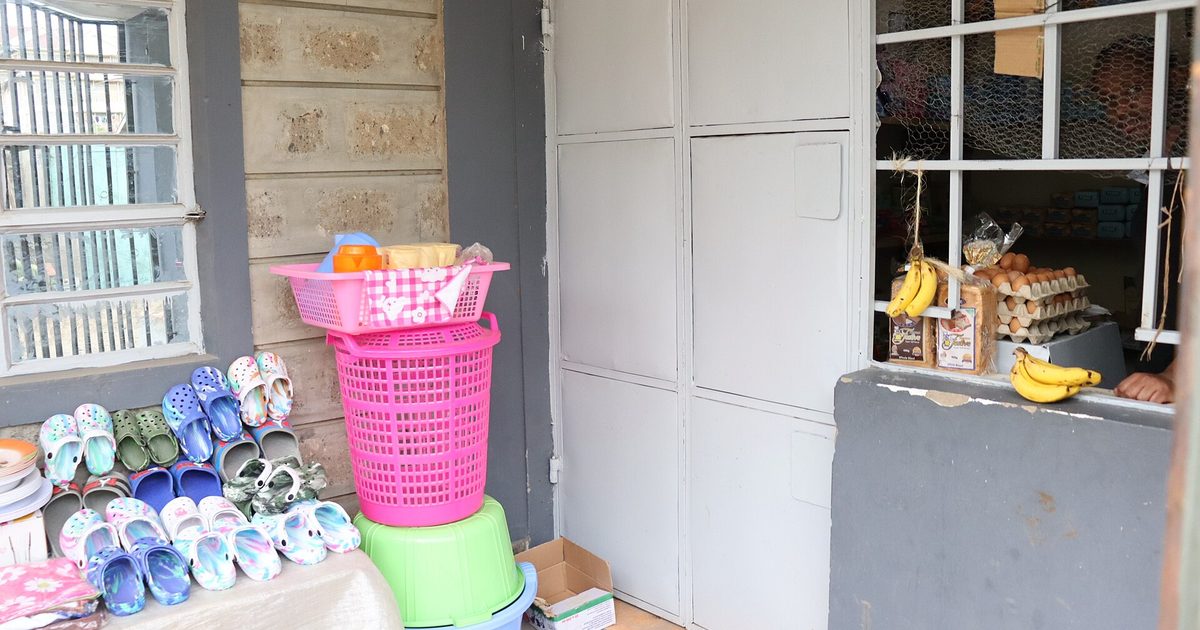
Cover photo: A small local kiosk selling household goods. Local kiosk.jpg by safaritravelplus, CC0, via Wikimedia Commons.