
Quick answer: Raise onion seedlings in a nursery for about 6–8 weeks, transplant at roughly 30 cm between rows and 7–10 cm between plants, keep the soil evenly moist and weed-free, and control thrips, the main pest. Bulb onions are ready about 3–4 months after transplanting when the tops fall over. Cure them in a dry, airy place for 1–2 weeks before selling or storing; well-cured onions keep longer and fetch better prices.
Best Onion Varieties
| Variety | Notes |
|---|---|
| Red Creole | Popular, pungent, stores well |
| Bombay Red | Hardy, common in drier areas |
| F1 hybrids (various) | Uniform bulbs, higher yields, cost more seed |
Nursery and Transplanting
- Prepare raised nursery beds with fine soil and manure.
- Sow seed thinly in rows, cover lightly and mulch until germination.
- Water gently; harden seedlings by reducing water a week before transplanting.
- Transplant when seedlings are pencil-thick, about 6–8 weeks old.
- Water the field before and after transplanting.
Spacing, Feeding and Water
Common spacing is about 30 cm between rows and 7–10 cm within the row. Onions like well-drained, loose soil with organic matter; apply fertiliser based on a soil test and avoid too much nitrogen late in the season, which gives thick necks that store poorly. Water regularly but stop a couple of weeks before harvest. Drip irrigation saves water and keeps leaves dry.
Pests and Diseases
- Thrips: silvery streaks on leaves; scout often and follow integrated control, rotating approved products.
- Downy mildew and purple blotch: worse in wet weather; space well and remove infected leaves.
- Rots in storage: from bruising and poor curing.
Harvesting and Curing
- Harvest when most tops have fallen over.
- Lift bulbs gently and leave them on the field to dry for a few days if weather allows.
- Cure under shade with good airflow for 1–2 weeks.
- Trim tops and roots, grade by size and remove damaged bulbs.
- Store in a dry, ventilated store on racks or in net bags.
Worked Example: Quarter Acre Under Drip in Kajiado
Joseph plants Red Creole on a quarter acre with drip lines fed from a tank. He scouts for thrips twice a week, cures the bulbs under a shade net for 10 days, and stores them in net bags on raised racks. Instead of selling at harvest when prices are low, he sells in batches over six weeks to traders in Kitengela.
Starter Checklist
| Item | Why |
|---|---|
| Soil test | Correct fertiliser |
| Quality seed | Uniform bulbs |
| Water source and drip lines | Steady growth |
| Scouting routine for thrips | Protect yield |
| Curing shed and net bags | Storage and timing sales |
Your First 30 Days
- Week 1: soil test, buy seed, prepare nursery.
- Weeks 2–8: raise seedlings; prepare and manure the field.
- Week 9: transplant and start drip watering.
- Weekly: scout for thrips and weeds; record costs.
Common Mistakes to Avoid
- Planting without a water plan.
- Ignoring thrips until damage is severe.
- Harvesting and selling uncured onions.
- Everyone selling at the same time at low prices.
Figures here are rough planning guides from common Kenyan practice. Yields and prices vary by area, season and management: talk to your local agriculture, livestock or fisheries extension officer before investing.
Stay safe: never pay a "registration", "activation" or "withdrawal" fee to get paid, and never share your password or M-Pesa PIN. Real online income comes from people paying for your content, products or skills.
Create your free Stay Home Network account, or log in with H-MAIL on app.stayhomenetwork.com.
Frequently Asked Questions
How long do onions take to mature in Kenya?
About 3–4 months after transplanting, after 6–8 weeks in the nursery.
What is the best onion variety in Kenya?
Red Creole and Bombay Red are popular open-pollinated varieties; F1 hybrids give more uniform bulbs.
What is the spacing for onions?
About 30 cm between rows and 7–10 cm between plants.
How do I control onion thrips?
Scout often, use integrated pest management and rotate approved products as advised by an agronomist.
Why cure onions?
Curing dries the necks and skins so onions store longer without rotting.
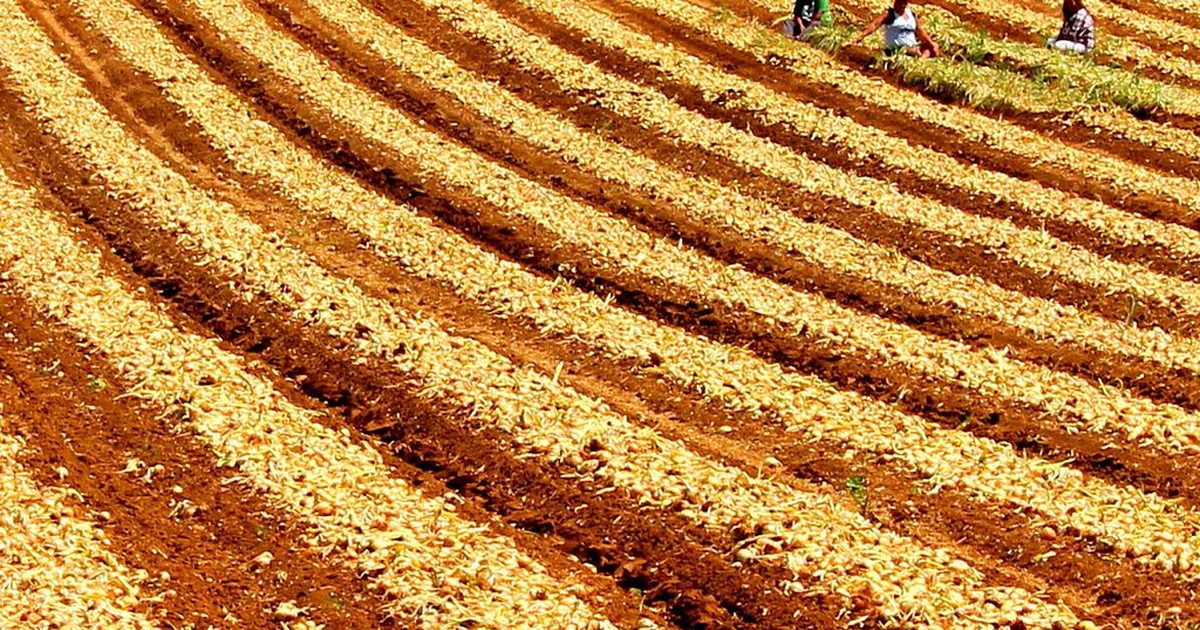
Cover photo: Onion rows in a field. Photo: onion crop by Natural Beauty on Film, BY 2.0, via Openverse.