
Quick answer: Start with one service you can do well (homes, offices, sofas and carpets, or post-construction cleaning), buy basic equipment (mops, buckets, microfibre cloths, detergents, a wet-and-dry vacuum), price per job or per month, register the business and get your county permit, and win regular contracts with offices, apartments, Airbnbs and schools. Reliable, trustworthy staff are the business.
Choose a Service
| Service | Equipment | Customers |
|---|---|---|
| House cleaning | Mops, buckets, cloths, detergents | Families, tenants moving out |
| Office cleaning | Same plus vacuum, trolleys | Offices, shops, clinics (contracts) |
| Sofa and carpet cleaning | Extraction machine or wet-and-dry vacuum, shampoo | Homes, hotels |
| Post-construction cleaning | Scrapers, vacuum, stronger detergents | Developers, new owners |
| Airbnb turnover cleaning | Linen plus cleaning kit | Hosts (Airbnb guide) |
Equipment
- Mops, buckets, squeegees, microfibre cloths
- Detergents and disinfectants (follow labels)
- Wet-and-dry vacuum or extraction machine for carpets
- Gloves, aprons, branded uniforms
- Ladder and extension cables
Tools and cleaning machines are listed on Buy More Mall.
Pricing
- Per job for homes: based on rooms and condition.
- Per square metre or per month for offices.
- Per seat for sofas, per square metre for carpets.
- Include labour, transport, products and equipment wear.
Register and Win Contracts
- Register a business name (how to register) and get a KRA PIN.
- Get a county permit (permit guide).
- Prepare a one-page company profile and price list.
- Offer a trial clean to offices and apartments.
- Ask happy clients for written references.
Staff and Trust
Vet staff, ask for good conduct certificates (how to get one), give uniforms and checklists, and supervise early jobs. Clients hire cleaners they trust in their homes and offices.
Example: Sofa Cleaning on Weekends
A young entrepreneur buys a wet-and-dry vacuum and upholstery shampoo, posts before-and-after sofa videos on TikTok and books weekend jobs in estates. Hotels and offices ask for quotes, and he hires two helpers on contract.
Your First 30 Days
- Week 1: choose a service and price list.
- Week 2: equipment, branding and registration.
- Week 3: trial jobs and before-and-after photos.
- Week 4: pitch offices and apartments.
Common Mistakes to Avoid
- Underpricing big jobs.
- Unvetted staff.
- Mixing chemicals.
- No written contract for monthly work.
Use Chemicals Safely
Read every label, wear gloves, open windows, and never mix bleach with acids or ammonia-based cleaners. Store products in their original containers away from food and children, and train every staff member on this before their first job.
Stay safe: never pay a "registration", "activation" or "withdrawal" fee to get paid, and never share your password or M-Pesa PIN. Real online income comes from people paying for your content, products or skills.
Create your free Stay Home Network account, or log in with H-MAIL on app.stayhomenetwork.com.
Frequently Asked Questions
How do I start a cleaning business in Kenya?
Choose a service, buy basic equipment, register, price clearly and pitch for regular contracts.
Is cleaning business profitable in Kenya?
Yes, especially with monthly office and apartment contracts.
What equipment do I need for a cleaning business?
Mops, buckets, microfibre cloths, detergents and a wet-and-dry vacuum or carpet machine.
How do I get cleaning contracts?
Offer trial cleans, show references and send a clear company profile.
How much do cleaning services charge?
It varies by job, size and area; include labour, products and transport in your price.
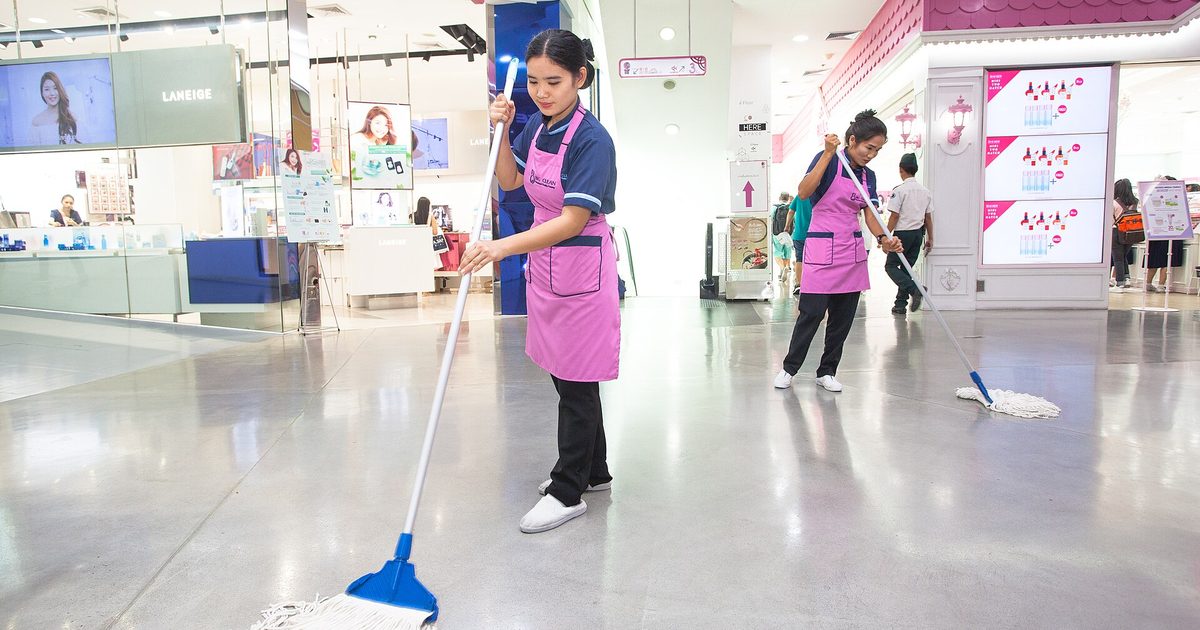
Cover photo: Cleaners mopping a shopping centre floor. Photo: บริการแม่บ้านทำความสะอาด แบบประจำ.jpg by Arayabee, CC BY-SA 4.0, via Wikimedia Commons.